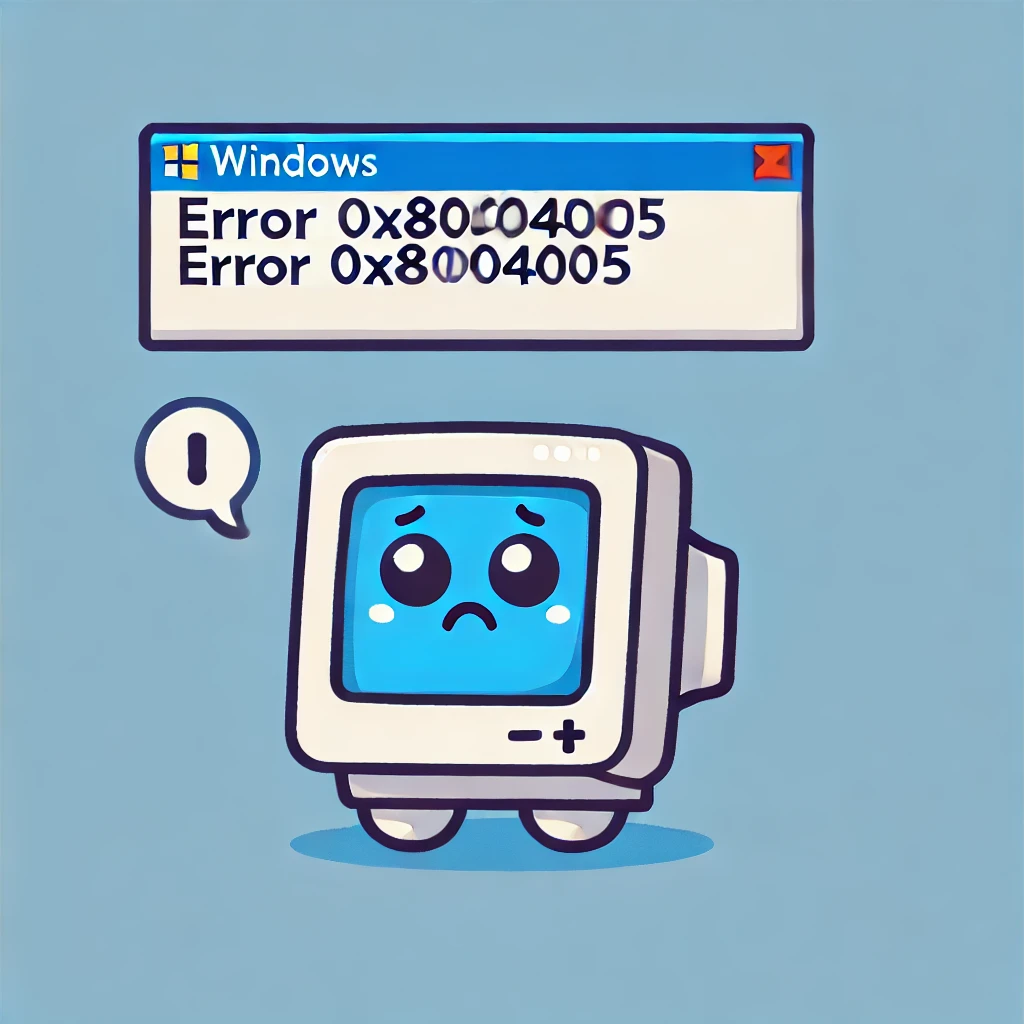
Error 0x80004005 is the classic Windows “Unspecified error.” Annoyingly vague, yes—but the underlying causes are usually predictable once you look at where it happens (file access, Windows Update, ZIP extraction, network shares, or VMs). This guide gives you clear, safe fixes for each scenario—updated for modern Windows 11 builds—plus quick checks you can run first.
Quick Diagnosis: Where are you seeing 0x80004005?
| Where it appears | Typical root cause |
|---|---|
| Opening / copying files & folders | Permissions/ownership, corrupted files |
| Extracting ZIP archives | Damaged archive, shell limitation—use a different extractor or PowerShell |
| Windows Update install / download | Update cache corruption, system file damage, driver conflicts |
| Accessing network shares | Auth issues, SMB protocol mismatch (legacy devices need SMB1) |
| Launching VMs (VirtualBox/VMware) | Virtualization disabled in firmware, Hyper-V conflicts, outdated hypervisor |
Start Here: Three fast, low-risk checks
- Restart (Start → Power → Restart). Temporary update or handle locks often clear with a clean boot.
- Free space: keep C: with ≥10 GB free (updates & repair tools need breathing room).
- Run Windows Update troubleshooter: Settings → System → Troubleshoot → Other troubleshooters → Windows Update → Run. Microsoft’s tool auto-fixes common update issues.
Fixes by Scenario
1) File or Folder Access (Access is Denied / 0x80004005)
Symptoms: copying, opening, or deleting fails immediately with 0x80004005.
Take ownership & reset permissions (safe approach)
- Right-click the folder → Properties → Security → Advanced.
- Owner → Change → select your account → enable “Replace owner on subcontainers and objects.”
- Add → Select a principal → your account → Full control → OK.
- Apply → OK → retry the operation.
If the item is truly corrupt, run a system file repair (see System Repair below) and check disk health.
2) ZIP Extraction Fails
Windows Explorer can choke on certain archives. Try a dedicated tool (7-Zip/WinRAR). Or use PowerShell’s built-in unzip:
That cmdlet is part of Windows PowerShell’s archive module.
3) Windows Update Fails
Common for cumulative updates—error text may still show 0x80004005. Work down this list:
- Run the Windows Update troubleshooter (see “Start Here”).
- Reset the Update cache (safe, reversible):net stop wuauserv
net stop bits
net stop cryptsvc
ren C:\Windows\SoftwareDistribution SoftwareDistribution.old
ren C:\Windows\System32\catroot2 catroot2.old
net start wuauserv
net start bits
net start cryptsvcThen reboot and try again.
- Repair system files (online servicing):DISM /Online /Cleanup-Image /RestoreHealth
sfc /scannowDISM repairs the component store used by Windows Update; SFC fixes protected system files.
- Manual (offline) install via the official Microsoft Update Catalog. Search the KB, download the MSU that matches your build, and install it directly.
Tip: If failures started right after a specific cumulative driver or firmware update, roll that item back in Settings → Windows Update → Update history before retrying the cumulative patch.
4) Network Share Access (Old NAS / Printer / DVR)
Modern Windows prefers SMBv2/v3. Very old devices only speak SMBv1 and can trigger 0x80004005. You can temporarily enable the legacy client to grab files—but turn it off again for safety.
- Press Win + R →
optionalfeatures→ Enter. - Enable SMB 1.0/CIFS File Sharing Support → OK → Restart.
- Copy what you need, then disable SMB1 afterward (SMB1 is deprecated/insecure).
Safer alternative: update the device firmware if possible to support SMBv2/v3, or map the share via a modern protocol.
5) Virtual Machine Errors (VirtualBox / VMware)
0x80004005 can pop when the hypervisor can’t start a VM.
- Enable virtualization in firmware: reboot → enter BIOS/UEFI (often F2/Del) → CPU/Advanced → turn on Intel VT-x or AMD-V → Save.
- Update your hypervisor to the latest major branch (VirtualBox/VMware frequently ship Windows 11 compatibility fixes in point releases).
- On Windows 11 Pro with Hyper-V features installed, avoid running conflicting hypervisors at the same time (turn off Hyper-V/WDAG if needed before using VirtualBox).
System Repair (works across scenarios)
When 0x80004005 stems from underlying system corruption, repair Windows components, then files:
sfc /scannow
DISM repairs the servicing stack/component store used by updates; SFC validates and restores protected files.
Summary: Pick the fix that matches your case
| Situation | Best first action |
|---|---|
| File/folder access denied | Take ownership + grant Full control to your account |
| ZIP won’t extract | Use 7-Zip/WinRAR or PowerShell Expand-Archive |
| Windows Update failing | Troubleshooter → reset cache → DISM/SFC → Catalog manual install |
| Network share to very old device | Temporarily enable SMB1 (then disable again) |
| VM won’t start | Enable VT-x/AMD-V in BIOS; update your hypervisor |
If nothing works
Grab a screenshot of the exact dialog and error timing, collect Event Viewer → Windows Logs → System entries at that timestamp, and—if the failure involves Windows Update—note the KB you’re installing and try the Microsoft Update Catalog package for your build.
You’ve got this—0x80004005 looks mysterious, but once you match the context to the right fix, it’s almost always solvable.
✔️ Related guides you might like:
▶︎ Fixing Windows 11 Update KB5058411: Common Errors and Solutions
▶︎ How to Fix Windows Update Error KB5063060 – Complete Guide
▶︎ Fixing Windows Error 0xc000021a: Causes, Step-by-Step Fixes
![[Solved] 5 Practical Ways to Open Large CSV Files Faster in Excel (Without Crashes)](https://kimiyoya.com/wp-content/uploads/2025/06/9645C06E-7812-45EA-A4C1-A815B895E3AC-375x375.jpg)